
What molecule am I?

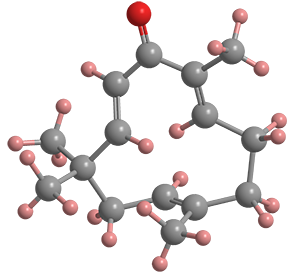
Zerumbone is an essential oil that occurs in the rhizomes of the tropical plant shampoo ginger Zingiber zerumbet, which is known for its medicinal properties. It was first described in two 1950 articles in the Indian Soap Journal by Dharam Bal Parihar and Sikhibhushan Dutt at the Indian Academy of Sciences (Bangalore). Ten years later, Sukh Dev at the Indian Institute of Science (also in Bangalore) refuted the structure that Parihar and Dutt assigned to zerumbone and established the correct structure.
In 2017, Virendra S. Rana and co-workers at the Indian Agricultural Research Institute (New Delhi) reported the concentrations of all the compounds in the essential oil of Z. zerumbet; zerumbone constituted 75% of it. They isolated zerumbone, which is known for its antifungal properties, and evaluated it for antifungal activity against three phytopathogenic fungi: Rhizoctonia solani, Sclerotium rolfsii, and Macrophomina phaseolina. Although zerumbone showed promising activity against all three, significantly higher application rates were required to reach the same effectiveness as the established fungicide hexaconazole1.
Rana et al. also evaluated the effect of zerumbone on seedling growth of the grass species Phalaris minor, which can be a contaminant in seed crops. They found that it strongly suppressed the root and shoot growth of the grass.
1. CAS Reg. No. 79983-71-4.
Zerumbone hazard information*
| Hazard class* | GHS code and hazard statement | |
|---|---|---|
| Skin sensitization, category 1 | H317—May cause an allergic skin reaction |  |
| Short-term (acute) aquatic hazard, category 1 | H400—Very toxic to aquatic life | 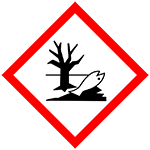 |
| Long-term (chronic) aquatic hazard, category 1 | H410—Very toxic to aquatic life with long-lasting effects | |
*Globally Harmonized System (GHS) of Classification and Labeling of Chemicals. Explanation of pictograms.
Molecules from the Journals
Triphenylborane1 (BPh3) is a symmetrical organoboron compound that was first reported in 1922 by Erich Krause and Rudolf Nitsche at the Technische Hochschule Berlin, who synthesized it from boron trifluoride2 and the Grignard reagent phenylmagnesium bromide3.
The boronic acid ester pinacolborane4 (HBPin) dates to 1969, when Latvian chemists V. G. Kalacheva, V. G. Ben'kovskii, and E. Svarcs described its synthesis via a reaction between pinacol5 and boric acid6. This, however, was a dubious result because the reaction does not account for the B–H bond in the product. A reliable synthesis was reported in 1992 by Charles E. Tucker, Jessica Davidson, and Paul Knochel* at the University of Michigan (Ann Arbor), who produced HBPin by treating pinacol with the borane–dimethyl sulfide adduct7.
BPh3 and HBPin “met” last month, when Yinlin Shao, Fangjun Zhang, and co-workers at Wenzhou University (China) and its medical school described their use in the exhaustive reduction of carboxylic acids to alkanes. HBPin was the reducing agent in the reaction; and BPh3 was the catalyst. The authors’ mechanistic studies of the reaction supported a proposed pathway of sequential hydroboration and deboration steps.
1. CAS Reg. No. 960-71-4.
2. CAS Reg. No. 7637-07-2.
3. CAS Reg. No. 100-58-3.
4. CAS Reg. No. 25015-63-8.
5. CAS Reg. No. 76-09-5.
6. CAS Reg. No. 10043-35-3.
7. CAS Reg. No. 13292-87-0.
Molecules from the Journals
MOTW briefly describes noteworthy molecules that appeared in recent ACS journal articles. See this week's edition.
This molecule was suggested by a reader. We present almost all of the molecules suggested by our readers. If you have a molecule that you would like us to consider, please send us a message, preferably including links to references about your suggested molecule. And thank you for your interest in Molecule of the Week! —Ed.
Zerumbone fast facts
| CAS Reg. No. | 471-05-6 |
| SciFinder name | 2,6,10- Cycloundecatrien- 1-one, 2,6,9,9- tetramethyl-, |
| Empirical formula | C15H22O |
| Molar mass | 218.34 g/mol |
| Appearance | White to off-white crystals or powder |
| Melting point | 65 °C |
| Water solubility | ≈1 mg/L |
Learn more about this molecule from CAS, the most authoritative and comprehensive source for chemical information.
Molecule of the Week needs your suggestions!
If your favorite molecule is not in our archive, please send us a message. The molecule can be notable for its current or historical importance or for any quirky reason. Thank you!
Stay Ahead of the Chemistry Curve
Learn how ACS can help you stay ahead in the world of chemistry.
