What molecule am I?


Harmine1 is one of several alkaloids that occur in the seeds of Peganum harmala, a flowering plant that grows in temperate climates such as the Mediterranean regions. Other major P. harmala alkaloids include harmaline2 and tetrahydroharmine3.
An early report on the P. harmala alkaloids came in 1911, when Ferdinand Flury at the University of Würzburg (Germany) described their pharmacology. Among other findings, he observed that harmine and harmaline paralyze frogs and cause convulsions in mammals.
Two years later, eminent organic chemist William Henry Perkin, Jr., and his graduate student Robert Robinson4 at the University of Manchester (UK) published a more detailed account of harmine and harmaline. They summarized previous work on the alkaloids, established a nomenclature system for alkaloids that have condensed pyridine and pyrrole nuclei, and prepared and characterized several alkaloid derivatives. Perkin and Robinson went on to publish six more articles on harmine and harmaline.
In the 1920s, articles began to appear about the occurrence of harmine, harmaline, and tetrahydroharmine in the South American vine Banisteriopsis caapi5. In one report, Lewis Lewin at the University of Berlin identified a substance he called banisterine in B. caapi and ascribed to it the same pharmacological effects as harmine. The two were later found to be identical. Lewin experimented with injecting the substance into humans and conjectured that it could be a therapeutic agent.
Lewin was on to something. B. caapi and an N,N-dimethyltryptamine6-containing plant, Psychotria viridis, are the components used to prepare ayahuasca, a psychedelic plant brew used for improved well-being by indigenous peoples in the Amazon rainforest. Recent studies have shown that ayahuasca and its components could have therapeutic value.
In 2023, Simon G. D. Ruffell at Onaya Science (Iquitos, Peru), the Psychae Institute (Melbourne, Australia), and the University of Melbourne and coauthors there and at other institutions worldwide extensively reviewed the historical, pharmacological, and therapeutic aspects of ayahuasca. The review included a table detailing the therapeutic and psychoactive effects of the P. harmala alkaloids; harmine was listed as having these properties:
- Antidepressant
- Enhancement of serotonin, norepinephrine, and dopamine levels
- Anti-addictive
- Diabetes management
The authors concluded, “Larger trials and longitudinal and multisite studies using advanced technology are necessary to evaluate ayahuasca’s potential as a medicine in western healthcare.”
A similar review was published the following year by Rafael Guimarães dos Santos* and Jaime Eduardo Cecilio Hallak at the University of São Paulo (Ribeirão Preto, Brazil) and the National Institute of Science and Technology in Translational Medicine (Porto Alegre, Brazil).
1. SciFinder name: 9H-pyrido[3,4-b]indole, 7-methoxy-1-methyl-.
2. CAS Reg. No. 304-21-2.
3. CAS Reg. No. 17019-01-1.
4. Robinson received the Nobel Prize in Chemistry in 1947.
5. Originally called Banisteria caapi.
6. CAS Reg. No. 61-50-7.
Harmine hazard information
| Hazard class* | GHS code and hazard statement | |
|---|---|---|
| Acute toxicity, oral, category 4 | H302—Harmful if swallowed | 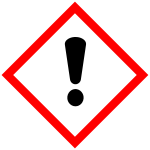 |
| Acute toxicity, dermal, category 4 | H312—Harmful in contact with skin | |
| Serious eye damage/eye irritation, category 2 | H319—Causes serious eye irritation | |
| Acute toxicity, inhalation, category 4 | H332—Harmful if inhaled | |
*Globally Harmonized System (GHS) of Classification and Labeling of Chemicals. Explanation of pictograms.
Molecules from the Journals
Oxalyl dicyanide1 is a moisture-sensitive inorganic compound first reported in 1972 by R. W. Begland* and D. R. Hartter at Du Pont (Wilmington, DE), who made it via the hydrolysis of diiminosuccinonitrile2 with p-toluenesulfonic acid3.
Little attention was given to oxalyl dicyanide until this past February, when Sven Ringelband, Theodore Cohen, and Frank Tambornino* at Philipps University Marburg (Germany) described its preparation via the reaction of oxalyl chloride4 and trimethylsilyl cyanide5. The authors went on to characterize the compound, including determining its crystal structure, vibrational spectra, and 13C NMR spectrum. They noted that oxalyl dicyanide rapidly hydrolyzes to oxalic acid and hydrogen cyanide.
2,3,7,8-Tetrachlorodibenzofuran6 (TCDF) is a polychlorinated dibenzofuran that is a byproduct of the production of other polychlorinated compounds. It is a persistent environmental contaminant from waste incineration, combustion devices that contain polychlorinated biphenyl oils, and industrial bleaching operations.
According to Xinni Xie and co-workers at the Chinese Academy of Sciences (Beijing), human exposure to TCDF accumulates mainly in liver and adipose tissues. They say, however, that “the effects of chronic exposure to environmentally relevant doses of TCDF on adipose tissues and obesity remain elusive.” In a study reported in February, they found that adult mice exposed to 0.3 or 3 μ/kg of TCDF over 16 weeks developed dose-dependent mild adiposity under normal (Chinese) diets.
When the animals were fed Western diets, however, the obesogenic effects of TCDF and associated metabolic disorders were more pronounced. The authors concluded that their results “strongly support that TCDF is an environmental obesogen and that more attention should be paid to the health risks of TCDF regarding obesity.”
1. CAS Reg. No. 36086-83-6.
2. CAS Reg. No. 28321-79-1.
3. CAS Reg. No. 104-15-4.
4. CAS Reg. No. 79-37-8.
5. CAS Reg. No. 7677-24-9.
6. CAS Reg. No. 51207-31-9.
Molecules from the Journals
MOTW briefly describes noteworthy molecules that appeared in recent ACS journal articles. See this week's edition.
This molecule was suggested by a reader. We present almost all of the molecules suggested by our readers. If you have a molecule that you would like us to consider, please send us a message, preferably including links to references about your suggested molecule. And thank you for your interest in Molecule of the Week! —Ed.
Harmine fast facts
| CAS Reg. No. | 442-51-3 |
| Empirical formula | C13H12N2O |
| Molar mass | 212.25 g/mol |
| Appearance | White to off-white crystals or powder |
| Melting point | 262–264 °Ca |
| Water solubility | Insoluble |
a. Variously reported from 225 to 338 °C.
Learn more about this molecule from CAS, the most authoritative and comprehensive source for chemical information.
Molecule of the Week needs your suggestions!
If your favorite molecule is not in our archive, please send us a message. The molecule can be notable for its current or historical importance or for any quirky reason. Thank you!
Stay Ahead of the Chemistry Curve
Learn how ACS can help you stay ahead in the world of chemistry.
