What molecule am I?


(–)-Hydroxycitric acid (HCA) is a natural tricarboxylic acid found mainly in the Indian tree Garcinia gummi-gutta, formerly named G. cambogia. It first appeared in the literature in 1941 in a brief article by German biochemists Carl Martius* and R. Maue, in which they used cinchonine salts to separate the racemic mixture into the (–)- and (+)-enantiomers.
HCA in the fruit rind of G. gummi-gutta is typically isolated as its lactone1, with which it exists in equilibrium in aqueous media. Traditional uses of the rind in south Indian cultures are as a souring agent in foods and as a preservative, predominantly for seafood. Ayurvedic medicine prescribes it to support gastrointestinal health and to treat inflammation.
In the 1970s, HCA, an inhibitor of the enzyme adenosine triphosphate citrate lyase, began to be studied for its ability to limit weight gain in animals. In the following decades, interest in it for weight loss grew; G. gummi-gutta rind extracts were sold over the counter as dietary supplements.
In 2003, Michael Shara and co-workers at Creighton University Medical Center (Omaha, NE) published the results of a 90-day animal study of the efficacy and safety of the commercial product of HCA-SX, a calcium–potassium HCA salt. The study showed that using the product resulted in weight loss. It did not cause any changes in hepatic and testicular lipid peroxidation, DNA fragmentation, or histopathological changes. In 2007, however, Diana Cullum-Dugan and Robert B. Saper at Boston Medical Center wrote, “Although HCA appears to be well tolerated, the evidence for efficacy [for weight loss] is currently contradictory.”
In the 2020s, HCA gained usefulness as a chiron2 for synthesizing medicinally significant molecules. In 2020, Prasad L. Polavarapu at Vanderbilt University (Nashville, TN), Ibrahim Ibnusaud at Mahatma Gandhi University (Kottayam, India), and colleagues at both institutions described the use of HCA lactone and the lactone of one of its stereoisomers as starting materials for synthesizing chiral pyrrolidine-2,5-diones, including (+)-crispine A3, which has several pharmacological properties including antidepressant, antiplatelet, antileukemic, and anticancer activities. In 2024, Polavarapu, Simimole Haleema at T. K. M. College of Arts and Science (Kollam, India), and collaborators followed up with a review of medicinals synthesized from HCA.
For additional information about HCA, see the ScienceDirect topics pages on medicine and dentistry and on pharmacology, toxicology, and pharmaceutical science.
1. CAS Reg. No. 27750-13-6.
2. A chiron is an optically pure, naturally occurring chiral building block.
3. CAS Reg. No. 474304-16-0.
(–)-Hydroxycitric acid hazard information*
| Hazard class** | GHS code and hazard statement | |
|---|---|---|
| Acute toxicity, oral, category 4 | H302—Harmful if swallowed | 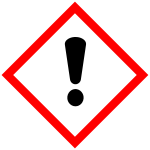 |
| Acute dermal toxicity, category 4 | H312—Harmful in contact with skin | |
| Skin corrosion/irritation, category 2 | H315—Causes skin irritation | |
| Serious eye damage/eye irritation, category 2A | H319—Causes serious eye irritation | |
| Specific target organ toxicity, single exposure; respiratory tract irritation, category 3 | H335—May cause respiratory irritation | |
*Compilation of multiple safety data sheets.
**Globally Harmonized System (GHS) of Classification and Labeling of Chemicals. Explanation of pictograms.
Molecules from the Journals
[10]-Shogaol1 is one of several substituted alkylbenzene compounds that are pungent constituents of the oil of ginger (Zingiber officinale). Others include former Molecules of the Week [6]-gingerol2, (E)-[6]-shogaol3, and zingerone4. A minor component of ginger oil, [10]-shogaol was first identified in a thin-layer chromatography study of the oil’s constituents by D. W. Connell and R. McLachlan at the Queensland Department of Primary Industries (Brisbane Australia).
This past June, Jianhai Yu at Southern Medical University (Guangzhou, China); Liangliang He, Feng Gao, and Qiao Zhang, at Jinan University (Guangzhou); and collaborators at these institutions reported that [10]-shogaol has broad antiviral and anti-inflammatory activity against dengue and zika viruses. Of the bioactive constituents of ginger that the researchers examined, they found that [10]-shogaol was the primary antiviral phytochemical with a half-maximal inhibitory concentration (IC50) value of 2.502 μM.
Bis[hexamethylbenzene]iron[0]5 [Fe(C6Me6)2] is a “sandwich compound”, with zero-valent iron between two hexamethylbenzene6 molecules. It was first described in a 1962 article by Ernst Otto Fischer7* and Freimund Röhrscheid at the Technical University of Munich (West Germany), who made it by reducing the corresponding iron[2] complex with dithionite (S2O42–) in strong base.
Since its synthesis, the electronic structure of Fe(C6Me6)2 has been in dispute as to whether it is an 18- or 20-valence-electron complex. In June, Oliver P. E. Townrow at the Karlsruhe Institute of Technology (Germany) resolved the issue by using single-crystal X-ray diffraction techniques and density functional theory to characterize the complex as “violating” the 18-electron rule; it has 20 valence electrons.
1. CAS Reg. No. 36752-54-2.
2. CAS Reg. No. 23513-14-6
3. CAS Reg. No. 23513-13-5.
4. CAS Reg. No. 122-48-5.
5. CAS Reg. No. 55280-55-2.
6. CAS Reg. No. 887-85-4.
7. Fischer was awarded the 1973 Nobel Prize for Chemistry for his work in organometallic chemistry.
Molecules from the Journals
MOTW briefly describes noteworthy molecules that appeared in recent ACS journal articles. See this week's edition.
Molecule of the Week wants your suggestions!
If your favorite molecule is not already featured in our archive, please send us your recommendation. We welcome molecules that are noteworthy for their historical or current importance, scientific impact, or unique characteristics. Thank you for your contribution!
(–)-Hydroxycitric acid
fast facts
| CAS Reg. No. | 27750-10-3 |
| SciFinder name | D-erythro-Pentaric acid, 3-C-carboxy- 2-deoxy- |
| Empirical formula | C6H8O8 |
| Molar mass | 208.12 g/mol |
| Appearance | White to off-white crystals or powder |
| Melting point | 182 °C (lactone) |
| Water solubility | ≈10 g/L |
Learn more about this molecule from CAS, the most authoritative and comprehensive source for chemical information.
Molecule of the Week needs your suggestions!
If your favorite molecule is not in our archive, please send us a message. The molecule can be notable for its current or historical importance or for any quirky reason. Thank you!
Stay Ahead of the Chemistry Curve
Learn how ACS can help you stay ahead in the world of chemistry.
